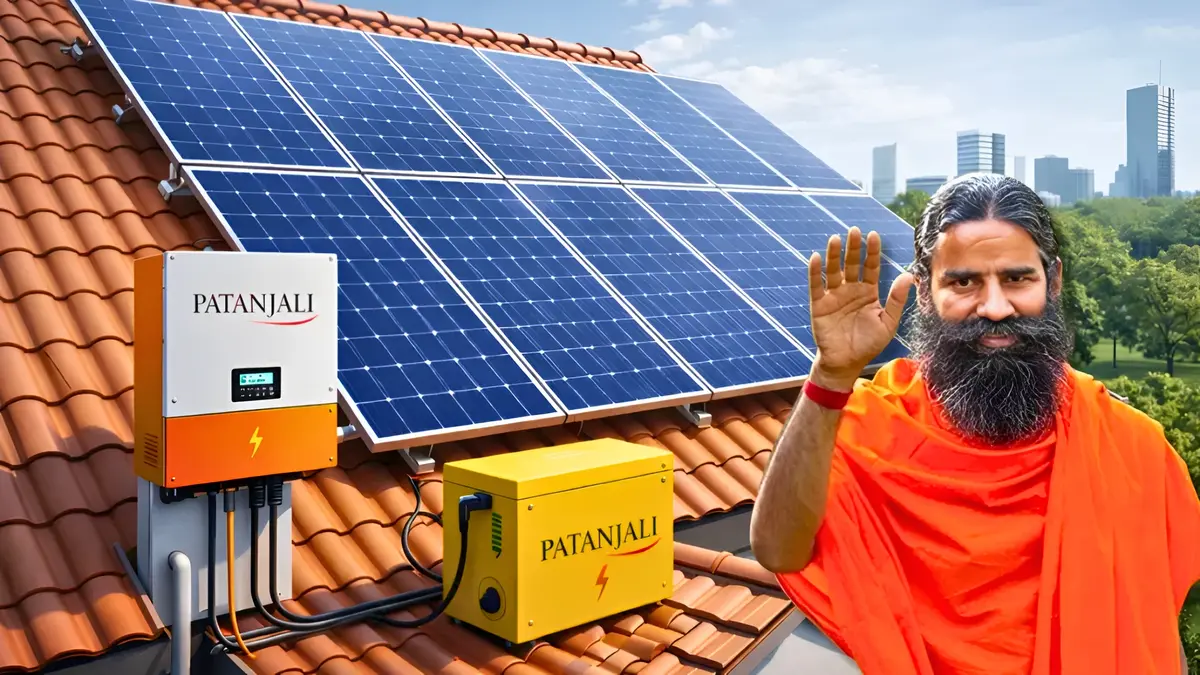
Patanjali Solar 2026: Patanjali Solar 2026 has suddenly grabbed attention after reports revealed surprisingly low pricing for its upcoming solar panel systems. With electricity bills rising and solar adoption accelerating across India, this announcement feels perfectly timed. The leaked details suggest Patanjali is preparing 2kW to 5kW solar systems aimed directly at middle-class households. Affordable pricing, government subsidy benefits, and long-term savings are being positioned as the biggest attractions, making solar energy feel more achievable than ever before.
Affordable Solar Pricing
The biggest shock surrounding Patanjali Solar 2026 is its expected pricing strategy. Industry leaks indicate that Patanjali may undercut several established solar brands by offering competitive rates for 2kW to 5kW systems. This approach could significantly reduce the entry barrier for homeowners considering rooftop solar. If these prices hold at launch, many families who delayed solar installation due to cost concerns may finally see it as a practical investment.
Options For Every Home
Patanjali Solar 2026 is rumored to offer flexible system sizes designed for different household needs. A 2kW system may suit smaller homes with basic electricity usage, while 3kW to 5kW systems are expected to support larger families with appliances like air conditioners and water heaters. This range allows homeowners to choose capacity based on consumption, roof size, and budget, rather than paying extra for unnecessary power output.
Massive Electricity Savings
One of the strongest selling points of Patanjali Solar systems is long-term savings. Early estimates suggest that households could cut electricity bills by up to 80 percent after installation. Over several years, these savings may exceed the initial investment, making solar not just eco-friendly but financially rewarding. With grid electricity costs expected to rise, solar power offers stability and predictable energy expenses for the future.
Subsidy Benefits Explained
Government subsidies are expected to play a key role in making Patanjali Solar 2026 even more affordable. Under existing rooftop solar schemes, eligible homeowners can receive significant subsidies depending on system size. Patanjali is reportedly planning to assist customers with subsidy paperwork, reducing complexity. This support could make the final payable amount much lower, especially for first-time solar buyers unfamiliar with government processes.
Made For Indian Conditions
Patanjali Solar panels are expected to be designed specifically for Indian weather conditions. High heat tolerance, dust resistance, and consistent output during intense summers are reportedly part of the design focus. This local adaptation can improve system efficiency and lifespan. For homeowners in regions with extreme temperatures, durability and performance reliability matter just as much as price, and Patanjali seems to be addressing that concern.
Simple Installation Process
Ease of installation is another area where Patanjali Solar 2026 aims to stand out. Reports suggest a streamlined process with trained technicians handling site inspection, installation, and basic system guidance. This reduces dependency on third-party installers and minimizes delays. A smoother installation experience can build trust among customers who worry about technical complications or hidden costs during solar setup.
Low Maintenance Promise
Solar buyers often worry about maintenance costs over time, but Patanjali is expected to highlight low-maintenance operation. With fewer moving parts and durable panel construction, routine cleaning and periodic checks may be sufficient. This makes solar ownership more convenient for families who want long-term benefits without frequent servicing expenses, adding to the overall value proposition of the system.
Boosting Energy Independence
Beyond savings, Patanjali Solar 2026 supports energy independence. Producing electricity at home reduces reliance on the power grid and protects households from outages and tariff hikes. For many users, this sense of control over energy consumption is becoming increasingly important. Solar power also aligns with India’s renewable energy goals, allowing homeowners to contribute to a cleaner and more sustainable future.
Final Word: Patanjali Solar 2026
Patanjali Solar 2026 appears set to disrupt the rooftop solar market with aggressive pricing, practical system sizes, and strong subsidy support. If the leaked details translate into reality, solar energy could become accessible to a much wider audience. For homeowners seeking long-term savings, energy security, and eco-friendly power, Patanjali’s upcoming solar systems may prove to be one of the most impactful solar launches in recent years.